
Emma Hayes Reshapes the U.S. Roster as Qualifying Window Narrows
Authored by betbonus.asia, 15-04-2026
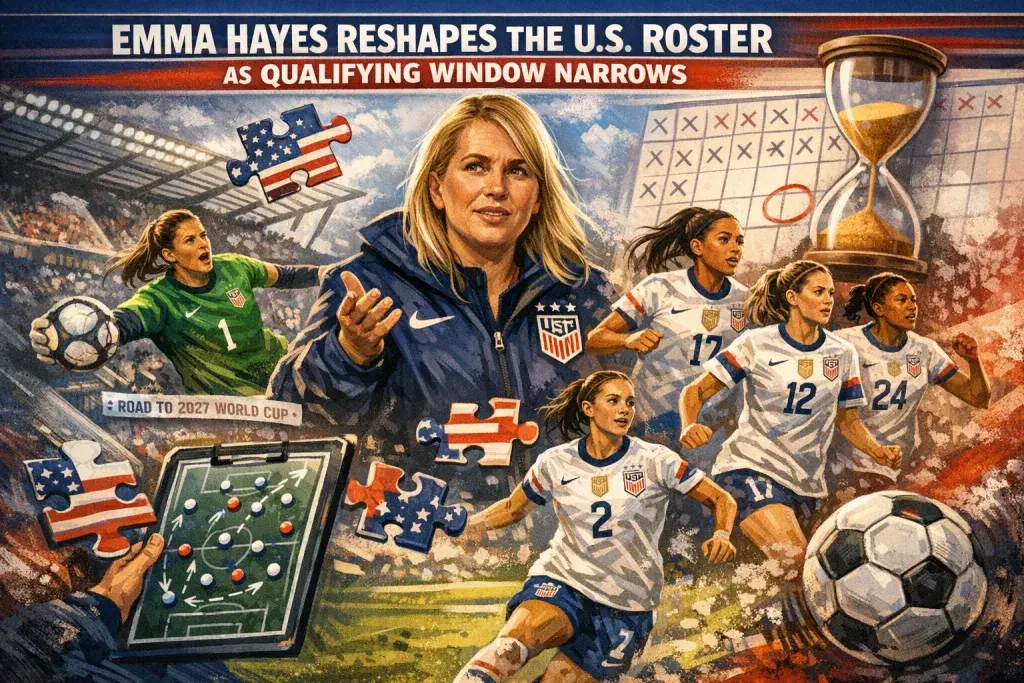
A 2-1 victory over Japan at PayPal Park in San Jose, California, gave the U.S. Women's National Team its first result of a three-game series, but the result itself was almost secondary to what head coach Emma Hayes extracted from it: information. With the 2027 FIFA Women's World Cup qualifying cycle tightening, Hayes is using this rare sequence of back-to-back-to-back fixtures against a single high-level opponent to evaluate personnel combinations she will not have many more chances to see before the qualifying window closes.
A Deliberate Rotation Built Around a Deadline
Hayes was transparent with the media before the first fixture about her intentions. Playing the same opponent three times in succession is not routine at the international level, and she is treating each fixture as a distinct evaluation exercise rather than a continuation of the previous one. The second fixture will feature an almost entirely different group of personnel than the one that secured Saturday's result.
The first starting lineup leaned heavily on established figures. Rose Lavelle earned her 100th career start for the national side and converted for her 28th international goal. Lindsey Heaps, with more than 100 caps to her name, anchored the midfield and scored her 40th international goal, becoming the 16th person in program history to reach that mark. The average cap count across the starting eleven going into the fixture was 56.3 — a deliberate signal from Hayes that she wanted experience on the field for the opening test against a technically demanding opponent.
For the second fixture, the expectation is that figures including Claire Hutton, Lily Yohannes, Olivia Moultrie, and Jaedyn Shaw will feature centrally. Hayes also indicated she may shift her midfield configuration, having chosen a six-and-eight structure in the opening fixture rather than a double pivot. "I wanted to put a lot of experience in the first game," Hayes said after the final whistle. "So I opted for that. I wanted to play a six and an eight, as opposed to a double six."
Goalkeeping Depth and the Question of Distribution
Between the posts, Claudia Dickey has been the consistent first-choice option under Hayes. Across nine appearances for the national side, Dickey has recorded seven shutouts — a rate that reflects both her own quality and a well-organized defensive structure operating in front of her. Saturday's performance included two significant saves despite conceding once.
The second fixture is expected to call on Phallon Tullis-Joyce, who carries six caps for the national side and plays a prominent role at Manchester United in the Women's Super League. Hayes has previously identified distribution from the back as an area she wants Tullis-Joyce to develop further, particularly as the program's possession-oriented approach from deep positions demands a goalkeeper who can function comfortably as an additional outlet in build-up. This fixture — against a high-pressing, technically refined opponent — represents exactly the kind of environment where that specific quality gets tested in real conditions.
Sophia Wilson, Returning Depth, and the Outside Back Picture
One of the more personal storylines from the opening fixture was the return of Sophia Wilson, who had not appeared for the national side since the 2024 Paris Olympic final. Seven months after giving birth to her first child, Wilson started alongside Trinity Rodman in a front two. She was substituted in the 67th minute, replaced by Ally Sentnor. Hayes was candid about what the appearance meant — and what it was not yet meant to be. "She has to build her way back to it," Hayes told the media. "But I am really pleased with her. It is a great start for her." Wilson is unlikely to start the second fixture, and her involvement, if any, will probably be measured.
In the wider defensive structure, Emily Fox and Gisele Thompson both completed full 90-minute appearances on Saturday. Hayes specifically noted Thompson's technical composure, while also identifying a second-half tendency to press out of the defensive line in moments that required her to hold position — a detail that carries direct relevance when the opponent is capable of exploiting the space behind a stepped-up outside back. For the second fixture, Lilly Reale — U.S. Soccer's Young Female Player of the Year — and Avery Patterson are among those expected to be in contention for those wide defensive positions, each bringing a different blend of offensive and defensive qualities.
Dead-Ball Execution and the Margin Between Winning and Drawing
The opening goal of the series arrived through a carefully constructed dead-ball sequence. Sam Coffey delivered a far-post service, Trinity Rodman redirected it centrally, and Lavelle finished with a left-footed volley in the ninth minute. Hayes acknowledged this was not coincidental. "It is something we have been working on," she said. "We have to improve our goal-scoring chances from dead balls. I think there has been real progress made by the team this year." She added that the same discipline must apply in defense, where surrendering set-piece opportunities against technically proficient opposition carries measurable risk.
The broader reflection Hayes offered after the first result was one of measured progress. "I think 12 months ago, we might have drawn this game," she said. "I think the progress is in staying in the game and not conceding a second goal." That framing — defining success partly by what did not happen — speaks to where this group currently sits: capable of winning close, competitive fixtures against elite opposition, but still refining the details that separate consistent results from occasional ones. With qualifying approaching, the remaining fixtures in this series are less about the outcomes and more about the answers Hayes needs before the real tests begin.